
Problem this solves
Technology decisions are scattered across AI pilots, Microsoft projects, vendor advice, security concerns, and disconnected IT priorities.
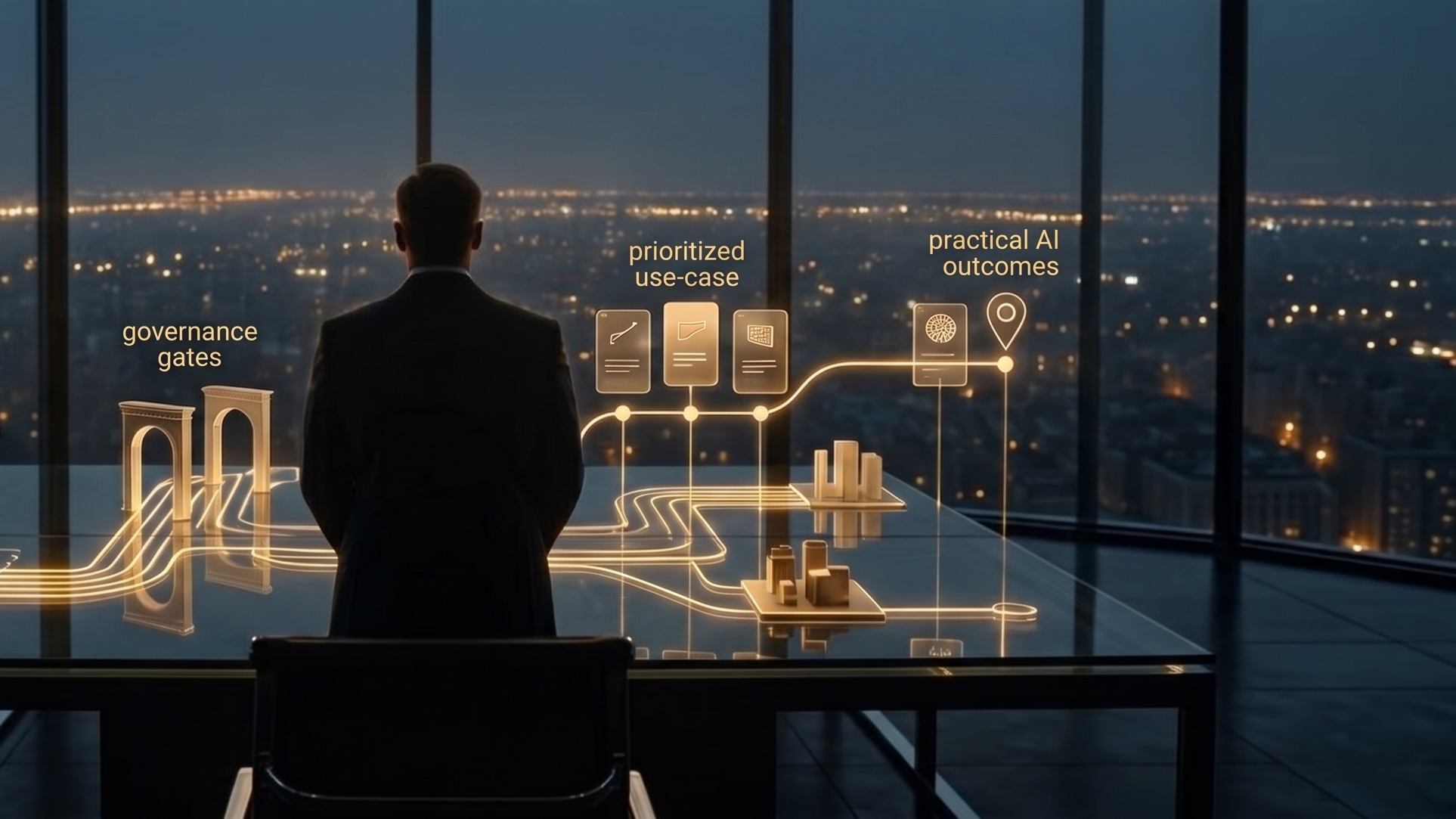
AI + Analytics / Strategic Leadership
LUMATARRA helps growing companies make better technology decisions, prioritize the right AI and IT investments, modernize the Microsoft ecosystem, govern risk, and turn strategy into an actionable roadmap your team can execute.
Technology decisions are scattered across AI pilots, Microsoft projects, vendor advice, security concerns, and disconnected IT priorities.
A practical executive roadmap for AI, innovation, IT modernization, Microsoft investments, governance, vendors, data, cloud, security, and adoption.
Senior technology leadership without hiring a full-time CIO: better prioritization, clearer investment decisions, reduced risk, and an executable plan.
A focused operating review can produce the first decision map quickly. Ongoing vCIO or advisory cadence keeps the roadmap moving.
Microsoft 365, Teams, Copilot, Fabric, Power BI, Azure, Entra ID, Purview-aligned governance, security, and cloud modernization.
The leadership layer
Strategic Technology Leadership aligns the AI + Analytics product to business priorities, Microsoft investments, governance, vendors, adoption, and a sequenced roadmap that can be executed.
Executive technology leadership, roadmap ownership, prioritization, vendor oversight, and board-ready technology direction.
Identify the AI and innovation bets that make money, save time, reduce risk, or unlock capacity.
Turn scattered IT requests and aging systems into a sequenced modernization plan tied to business outcomes.
Align Microsoft 365, Azure, Teams, Fabric, Power BI, Copilot, identity, and governance into one practical direction.
Prioritize the foundation needed for trusted analytics, secure AI adoption, and scalable operations.
Help leadership evaluate providers, rationalize tools, clarify accountability, and keep external partners aligned.
Define standards, permissions, acceptable use, training, measurement, and adoption plans that teams can actually follow.
Strategy -> Foundation -> Execution
We group the work this way so buyers can understand the whole LUMATARRA model without feeling like they are shopping a menu of disconnected services.
01
AI, innovation, IT roadmap, vCIO leadership, governance, investment priorities, and executive decision-making.
02
Microsoft Fabric, Power BI, Azure, Microsoft 365, data, cloud, security, identity, permissions, and reporting modernization.
03
Executive Intelligence, AI agents, Teams workflows, automation, briefs, alerts, decisions, and follow-through.
Positioning discipline
The point is better technology judgment at the leadership table. Helpdesk, device support, and commodity managed IT are not the offer.
vCIO here means executive technology leadership, not ticket handling or generic managed IT.
Strategy is tied to operating outcomes, Microsoft readiness, governance, data, workflow, and execution.
We help leadership decide what matters, what to defer, and where partners need accountability.
Strategic technology leadership FAQ
Clear answers help leaders compare options, understand risk, and move from research to a focused operating review.
Strategic technology leadership gives executive teams senior guidance on AI, IT roadmap, Microsoft investments, data, cloud, security, governance, vendors, and adoption.
No. LUMATARRA is not positioning this as helpdesk or commodity managed IT. The work is executive advisory, prioritization, roadmap ownership, and execution leadership.
Use a vCIO when technology decisions are material to growth, risk, efficiency, AI adoption, data visibility, or vendor spend but the company does not need or cannot justify a full-time CIO.
AI strategy only works when leadership ties use cases to business outcomes, governance, data readiness, adoption, and a sequenced Microsoft-aligned roadmap.
Next move
We will help you decide what to prioritize, what to defer, and what Microsoft foundation has to be ready before AI can produce measurable impact.